DLSS 5 vs DLSS 4: not the next rung
The numbering suggests DLSS 5 is a better DLSS 4. It is not: DLSS 4 and 4.5 exist to produce frames faster, DLSS 5 exists to change what is in them, and it pays for that with a large share of the frame rate. What each one does, where DLSS 5 sits in the frame, and what it costs card by card.
The short answer
They are not versions of the same thing. DLSS 4 and 4.5 — Super Resolution, Ray Reconstruction, Multi Frame Generation — make a game faster. DLSS 5 Neural Rendering runs after them, on the finished frame, and changes its lighting and materials; it makes a game slower. In NBA 2K27, the only game that ships it, ComputerBase's averages put the cost between 36% (RTX 5090 at 1440p) and 69% (RTX 5070 at 4K). It does not replace the others: Super Resolution stays on underneath, and Frame Generation on top is how you get the number back — at the latency Frame Generation always costs.
Checked 24 September 2026
Real DLSS 5 comparisons, OFF and ON
Frames rendered on the site's shared GPUs and published by the people who made them. Same frame, same resolution: the only difference is DLSS 5.
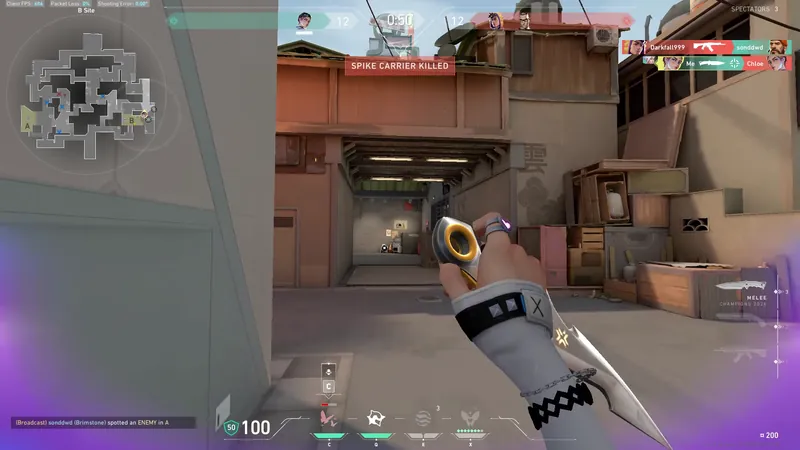 DLSS OFF
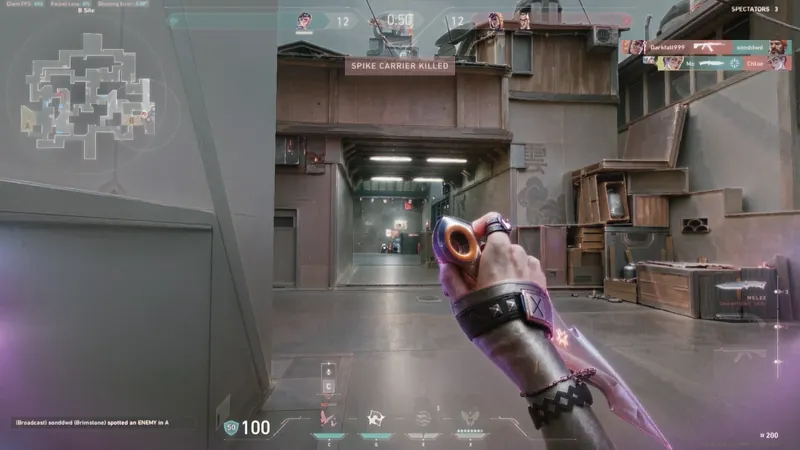 DLSS 5 ON
 DLSS OFF
 DLSS 5 ON
 DLSS OFF
 DLSS 5 ON
What DLSS 5 costs, card by card
| Card · resolution | Cost | NBA 2K27, DLSS 4.5 Balanced underneath (ComputerBase) |
|---|---|---|
| RTX 5090 · 1440p | −36% | 205.2 → 131.6 fps average. With 4× Multi Frame Generation on top: 378.7 fps displayed. |
| RTX 5080 · 1440p | −53% | 193.3 → 90.5 fps average. With 4× Multi Frame Generation on top: 255.4 fps displayed. |
| RTX 5070 Ti · 1440p | −58% | 185.3 → 78.5 fps average. With 4× Multi Frame Generation on top: 226.9 fps displayed. |
| RTX 5070 · 1440p | −65% | 164.8 → 58.3 fps average. With 4× Multi Frame Generation on top: 171.5 fps displayed. |
| RTX 5060 Ti · 1440p | −64% | 120.0 → 43.7 fps average. With 4× Multi Frame Generation on top: 126.4 fps displayed. |
| RTX 5060 · 1440p | −64% | 105.2 → 37.8 fps average. With 4× Multi Frame Generation on top: 98.3 fps displayed. |
| RTX 5090 · 4K | −57% | 179.4 → 76.6 fps average. With 4× Multi Frame Generation on top: 248.5 fps displayed. |
| RTX 5080 · 4K | −65% | 136.2 → 47.5 fps average. With 4× Multi Frame Generation on top: 156.9 fps displayed. |
| RTX 5070 Ti · 4K | −67% | 124.2 → 40.6 fps average. With 4× Multi Frame Generation on top: 134.7 fps displayed. |
| RTX 5070 · 4K | −69% | 96.6 → 29.5 fps average. With 4× Multi Frame Generation on top: 99.0 fps displayed. |
What each version actually does
DLSS 4, in January 2025, brought the transformer model to Super Resolution and Multi Frame Generation to RTX 50. DLSS 4.5, in January 2026, added a second-generation transformer for Super Resolution with five times the compute of the first, for every RTX card, and 6× and Dynamic Multi Frame Generation for RTX 50. In August 2026 DLSS 4.5 Ray Reconstruction followed, again for every RTX card.
All of that is about making frames: rendering fewer pixels and reconstructing the rest, denoising ray tracing, inventing whole frames between real ones. The goal is the same picture, sooner.
DLSS 5 does something else. NVIDIA describes it as infusing the scene with photoreal lighting and materials, anchored to the game's 3D content, with developer controls for intensity, colour grading and masking. The goal is a different picture — and it takes time to make it.
Where DLSS 5 sits in the frame
ComputerBase describes the order: the frame is rendered with Super Resolution or Ray Reconstruction first, DLSS 5 then reworks the lighting, and Multi Frame Generation can come after that. Guru3D puts it the same way — the final stage of the graphics pipeline, applied to the finished frame.
So DLSS 5 stacks on top of DLSS 4.5; NVIDIA says it builds on Super Resolution, Multi Frame Generation and Ray Reconstruction. In NBA 2K27 they are separate lines in the menu, and Neural Rendering is its own on/off switch, with F9 to toggle it while playing.
Why the cost moves so much
There is no single «DLSS 5 costs X%». On ComputerBase's bench the RTX 5090 at 1440p loses about a third of its frames, while an RTX 5070 at 4K loses more than two thirds. The pattern is the one you would expect from a model that runs on every output pixel: more pixels and fewer Tensor Cores both make it worse.
Other outlets land in the same range. Digital Foundry measured the RTX 5090 at 4K going from 128.4 to 62.7 fps, a 51% drop; Guru3D measured 140 to 59 fps at 1440p without Frame Generation.
Frame Generation recovers the displayed number — ComputerBase got 378.7 fps on the RTX 5090 and 98.3 on the RTX 5060 at 1440p with DLSS 5 and 4× Multi Frame Generation — but not the responsiveness. Digital Foundry measured 50–60 ms of latency on the RTX 5090 with 4× Frame Generation, and above 60–70 ms on the RTX 5080 and 5060. NVIDIA's own «up to 370 fps» figure for the RTX 5090 is with the full suite, Frame Generation included.
It also draws more power
The same work that costs frames costs watts. ComputerBase measured the RTX 5090 in NBA 2K27 at 1440p going from 299 to 500 W with DLSS 5 on, and from 417 to 561 W at 4K. The RTX 5060 barely moved, 136 to 144 W — it was already the frame rate that gave.
What DLSS 4.5 has that DLSS 5 does not
An override. DLSS 4.5's models can be forced from the NVIDIA App through DLSS Override – Model Presets, in games that shipped an older DLSS. DLSS 5 cannot: NVIDIA confirmed it must always be integrated into the game itself, so it arrives one game at a time.
And range. DLSS 4.5 Super Resolution and Ray Reconstruction run on every RTX card; DLSS 5 is RTX 50 only for now. NVIDIA's statement of 3 September says it will work on expanding official support to RTX 40 once RTX 50 performance is more fully tuned, with the RTX 50 model updates expected later this fall. The «later this fall» belongs to the RTX 50 updates, not to RTX 40 — several reports read it the other way.
What it changes on screen
In NBA 2K27, ComputerBase found the lighting better with the geometry untouched, most visible in close-ups and subtle during play. HotHardware, which called it a post-processing filter in which the model becomes authoritative to an extent, gave it a conditional recommendation.
The reveal demos in March went less well: faces that came out smoothed and glossy, and the argument that one model applied to many games makes them look alike. That is the reason the developer controls exist — and the reason what ships in each game may look milder than the demos.
See the difference before you pay for it
If the question is whether DLSS 5 is worth two thirds of your frames, look at what it does first. This site keeps RTX 40 and 50 cards powered on and hands one to you for 180 seconds: upload a clip, the NVIDIA runtime processes it on our hardware, and you download the result with the render report. Your own frame rate is not involved at all. Free, non-profit, and sometimes queued, because the cards are real.
Try it without an RTX →Questions this page gets
Does DLSS 5 replace DLSS 4?
No. It runs on top of it: the frame is still upscaled by Super Resolution, and DLSS 5 reworks the lighting of the result. Frame Generation, if you use it, comes after.
How many frames does DLSS 5 cost on an RTX 5060?
In ComputerBase's NBA 2K27 test at 1440p, 105.2 fps became 37.8 — about 64%. With 4× Multi Frame Generation on top it showed 98.3 fps, with the latency that generated frames always carry.
Can an RTX 4090 run DLSS 5 officially?
Not yet. NVIDIA says RTX 40 support will follow once RTX 50 is tuned, with no date. A patched DLL has run it in Control on an RTX 4090, from about 130 to about 82 fps — roughly 37%, although the article reporting it writes 58%.
Is DLSS 5 just a filter?
It works on the finished frame, as the last stage of the pipeline, which is why some reviewers call it a post-processing filter. NVIDIA's point is that it is guided by the game's 3D data rather than by the pixels alone, and that the studio sets how far it goes.
Where this comes from
The cost column is computed from ComputerBase's average frame rates rather than copied from their percentages: in one row, RTX 5080 at 1440p, their 48% does not match their own 193.3 → 90.5 fps, which is 53%. Every other figure is quoted as published.
- ComputerBase — DLSS 5 in NBA 2K27 tested: benchmarks (4 Sep 2026)
- ComputerBase — DLSS 5 in NBA 2K27 tested: power draw (4 Sep 2026)
- ComputerBase — DLSS 5 in NBA 2K27 tested: verdict (4 Sep 2026)
- ComputerBase — Nvidia DLSS 5: launch (1 Sep 2026)
- NVIDIA — DLSS 5 3D-Guided Neural Rendering Debuts in NBA 2K27 (1 Sep 2026)
- NVIDIA — DLSS 4.5: Dynamic Multi Frame Generation 6X and second-generation transformer Super Resolution (6 Jan 2026)
- NVIDIA — Gamescom 2026: DLSS 4.5 Ray Reconstruction (25 Aug 2026)
- NVIDIA Newsroom — DLSS 5 Delivers AI-Powered Breakthrough in Visual Fidelity for Games (16 Mar 2026)
- Guru3D — NVIDIA DLSS 5 review with NBA 2K27 (4 Sep 2026)
- HotHardware — NVIDIA DLSS 5 Neural Rendering tested (4 Sep 2026)
- XDA — Digital Foundry's DLSS 5 measurements on the RTX 5090 (11 Sep 2026)
- Engadget — Why is the internet so upset about DLSS 5? (12 Sep 2026)
- Wccftech — NVIDIA confirms DLSS 5 support is planned for RTX 40 GPUs (3 Sep 2026)
- TweakTown — DLSS 5 mod also works on RTX 40 series GPUs (28 Aug 2026)